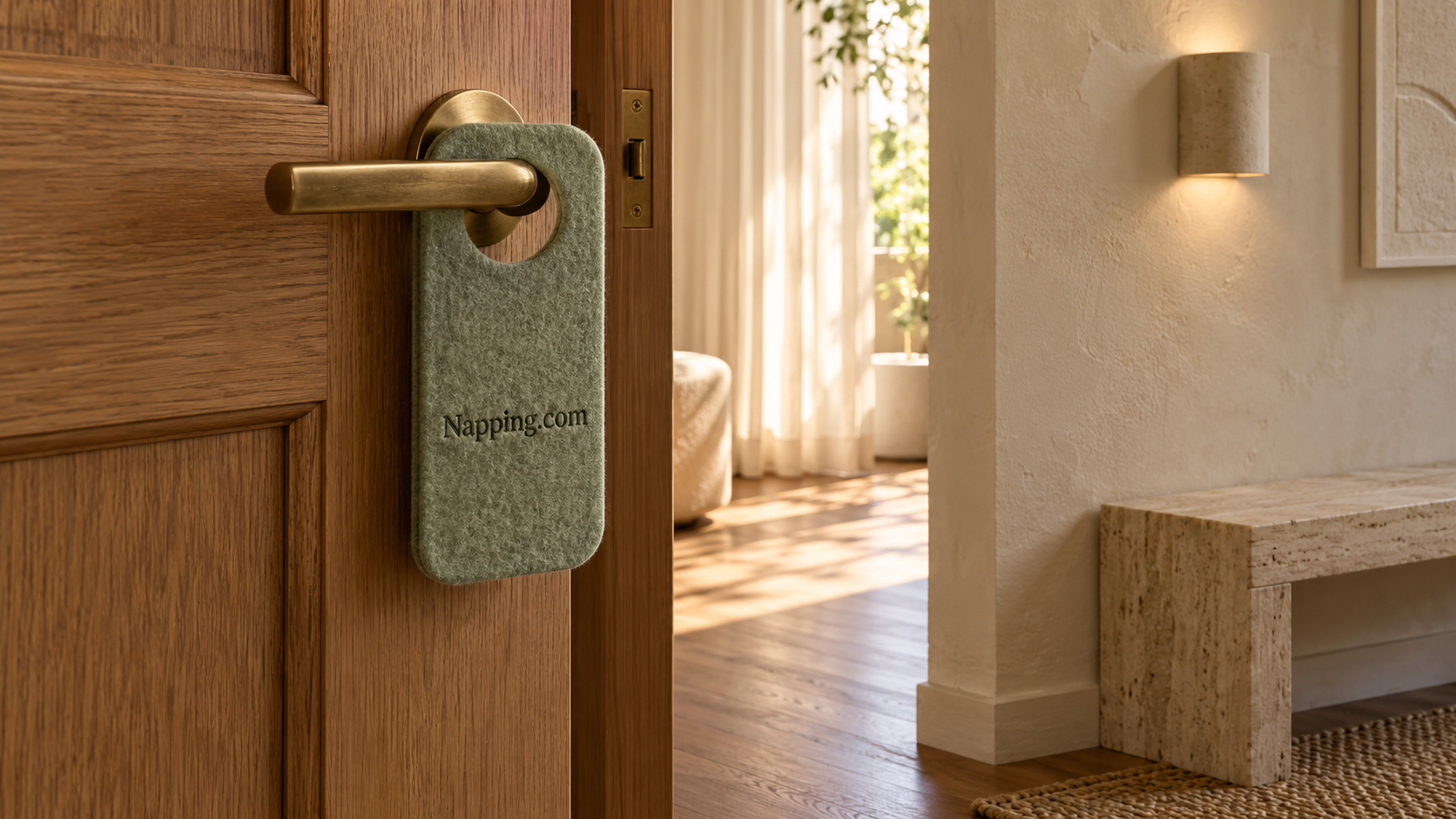
A workplace nap room begins with a room, a booking arrangement and a set of expectations people can understand. Soft furnishings can make the space welcoming, but they cannot answer whether the door will open unexpectedly or whether a break is allowed at that time. Before choosing a colour palette, establish how the room will be used. The aim is a modest, well-kept place that fits the workplace, with instructions as clear as those for any other shared amenity.
This guide considers the practical design of a short-rest space. It does not assume that every office needs one or that a room will produce a particular health or performance result. An employer has to decide whether the use fits its setting and how it relates to its own policies. The design work then gives those decisions a physical form: a route, a door, furniture, controls and a way to leave the space ready for another person.
Look at the proposed location
Visit the room during a normal working day. Listen for nearby meetings, deliveries, doors and kitchen equipment. Check whether the route crosses an area where someone resting would feel conspicuous. Notice whether the space is also used for storage, calls or other activities that would interrupt a booking. A floor plan will not reveal all of these conditions. Walking the route at the intended time can show why an apparently convenient room might be difficult to use.
Write down the conditions before discussing decorative details. Which sounds can be reduced? Can people find the room without asking several colleagues? Is the door easy to identify? What is the usable floor area once furniture is in place? If the room cannot meet the intended use, consider another location or a more limited offer. A small, accurate description of the space is better than a broad promise that the building cannot support.
Make access information visible
Show employees where the room is and how to reach it. Include the details that affect access in the workplace's usual information channel, rather than relying on word of mouth. Check the route and furniture layout with the people responsible for accessibility in that organisation. A photograph of an attractive chair does not establish that everyone can use it. The room should be assessed as a complete path and experience, with limitations described clearly where they exist.
Consider practical storage too. A person may arrive with a coat, bag, laptop or mobility aid. The resting surface should not become the only place to put everything. Provide stable storage that does not block the door or controls. A hook and a small shelf may be sufficient for some spaces, while others need a different arrangement. Choose based on the actual room and intended users, then show the arrangement in the room instructions.
Choose furniture that can be kept ready
Comfort matters, but so do cleaning and inspection. Look at seams, removable covers, exposed surfaces and the space around the furniture. The staff responsible for maintaining the room should be able to explain how the proposed arrangement will be cleaned before it is ordered. A piece that requires specialist attention after every use may not suit the available schedule. The specification should match the resources the workplace can consistently provide.
Keep circulation space in the plan. A side table should be reachable without making the route awkward, and a lamp should not trail a cable across the floor. Avoid filling spare corners simply because a mood board includes several objects. Each item adds something to maintain and potentially move. A smaller set of well-placed objects can make the room easier to use and easier to return to a known condition after a visit.
Give people simple controls
Lighting should be understandable on arrival. If there are several switches, label their functions or simplify the arrangement. A visitor should not have to experiment with an unfamiliar control panel while the booking time runs down. The same applies to any audio or timer. Provide a short instruction in a consistent place, and keep the default setup usable for someone who does not want to adjust anything beyond the light.
Optional sound should remain optional. A speaker playing automatically may suit one person and bother another. Scents introduce another set of preferences and practical considerations. Begin with a neutral room and add features only when there is a clear reason and a reliable way to manage them. A space described as quiet should not depend on every visitor enjoying the same music. The room can feel considered through proportion, materials and order alone.
Explain the door and the ending
Tell users how privacy works. Explain the door mechanism, occupancy indicator and staff access arrangements. Avoid a vague assurance when a concrete description is available. A person deciding whether to use the room needs to know what happens during the booking, including any circumstances in which someone might enter. These instructions should agree with the actual hardware and the workplace's emergency procedures, rather than being written separately from them.
Set a clear expectation for how a visit ends. Is the user responsible for a timer? Does the booking tool send an alert? Is there a buffer before the next booking? A room calendar should allow the agreed reset time, not assume every visitor departs at precisely the last second. If there is a maximum session length, display it before booking and inside the room. Consistent instructions reduce the need for awkward conversations at the door.
Treat cleaning as part of the service
Assign responsibility for cleaning, checks and supplies. Make it easy to report a fault without having to identify the right person from memory. The room should have a clear status when it is unavailable, with the calendar reflecting that status. Otherwise an employee may travel to a space that cannot be used as described. A named owner for the amenity can keep these small pieces aligned as the room becomes part of everyday operations.
Separate the user's reset tasks from the cleaning schedule. A short reminder to remove belongings and return a cushion is different from an assurance that surfaces have been cleaned. Use precise wording for both. If linen is provided, explain where used items go and how replacements are supplied. The arrangement should be obvious enough that a first-time visitor can leave the room correctly without asking a colleague for a private explanation.
Review the experience after opening
Ask specific questions during an initial review. Could users find the room? Was the booking available at the expected time? Were the controls clear? Was anything missing? These answers point to concrete improvements. Keep the review focused on the service rather than asking people to prove a personal benefit from using it. A room that is easy to book and consistently ready is a practical outcome the workplace can assess directly.
Change the small things that create repeated friction. A clearer sign, a better shelf or a longer reset buffer may be more valuable than another decorative purchase. Keep the written description up to date when the arrangement changes. The room does not need to become a showcase. It needs to remain a reliable option, with the same understandable welcome on an ordinary Wednesday as it had on the day it opened.
Ask about Napping.com
Describe the business this name could become. Purchase interest and partnership proposals are welcome.
Send Inquiry