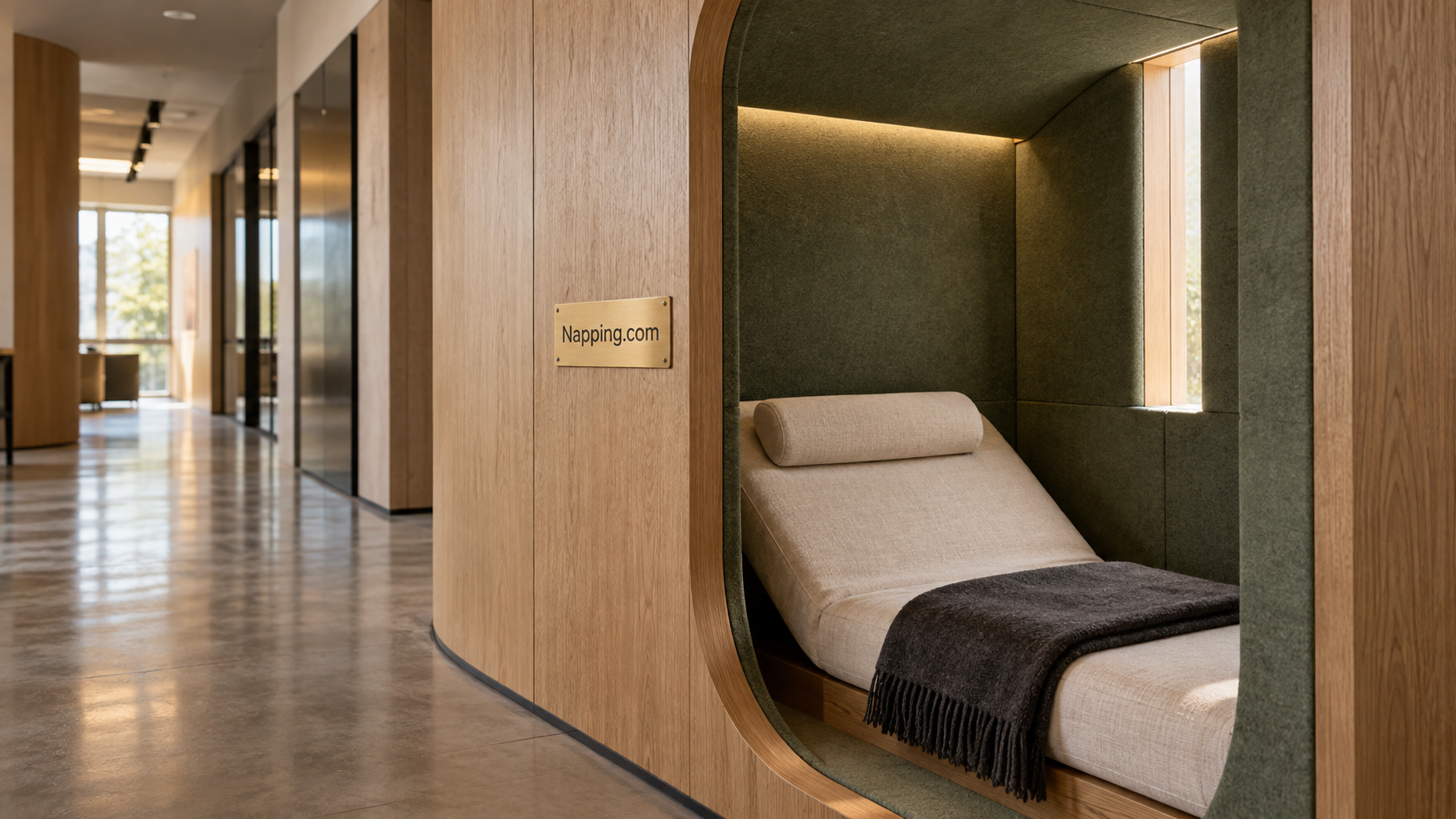
A workplace rest product under Napping.com could help an employer turn an available room into a clearly managed place for a short break. The offer might combine room planning, booking tools and practical instructions. Start with the ordinary questions an employee asks before using a shared space: whether it is available, who may use it, how long a visit lasts and how to leave it ready. This is an illustrative concept, not an existing workplace service.
Understand the room before buying furniture
Walk through the proposed space at the times people would use it. Notice voices from nearby meetings, door traffic, daylight and the route from working areas. A room that looks peaceful in an empty building may feel very different during lunch. Record the conditions that can be changed and the ones that cannot. That gives the employer a basis for choosing the space before committing to furniture, decoration or a booking system.
Consider who will need access. Desk workers, shift workers and visiting staff may have different schedules and permissions. A room described as available to everyone should not quietly depend on a manager's personal approval or a tool that only one group can open. Write down the intended users and check the practical route to booking. The aim is to make the offer understandable and usable within the actual workplace, with its particular constraints.
Give the room an owner
A shared amenity needs someone responsible for its condition. Name the role that handles checks, supplies and faults. Decide how a missing item or a broken light is reported, and who closes the room if it cannot be used as described. These details are easy to overlook during an attractive fit-out. They matter once the room becomes part of an ordinary working week and small problems need an answer without a meeting.
Write a reset instruction that can be followed quickly. It might cover returning a cushion, taking belongings away and leaving a surface clear. Cleaning responsibilities should be stated separately so employees do not have to guess what has been done between visits. The room's appearance should support those expectations. Storage, waste disposal and spare supplies need sensible places, rather than being hidden wherever space remains after the furniture is installed.
Keep booking information modest
A booking system needs enough information to allocate time and resolve a conflict. It does not automatically need a personal explanation for every visit. Consider whether colleagues need to see a user's name or simply that the room is occupied. State what the system records and who can access it. The information shown on a public calendar should match the practical purpose of managing availability, rather than making a private break into an office display.
Allow for late-running meetings and cancelled visits. A simple cancellation button and a clear rule for unused bookings may be enough. Avoid filling the schedule so tightly that there is no time to reset the room. The maximum booking length should be visible before someone reserves a slot. If the room has another purpose at certain times, show that in the calendar so employees can plan without relying on informal knowledge.
Explain the permission to use it
The room announcement should answer when a break can be taken and how that fits the workplace's arrangements. The employer needs to decide those expectations using its own circumstances and appropriate advice. The product can provide editable prompts and examples, but should not present a generic template as a complete answer for every organisation. The language on the door and the language used by managers should agree about how the room is intended to work.
A rest space also needs an alternative for people who do not want to use it. Participation should not become a test of enthusiasm for a workplace initiative. Someone may prefer a walk, a different break or no use of the room at all. Describe the amenity as an available option. That keeps the introduction focused on the practical offer rather than asking employees to make a public statement about their personal habits.
Pilot the service in ordinary conditions
A small pilot can reveal questions the initial plan missed. Ask whether the room was easy to find, whether the booking instructions were clear and whether it was ready at the expected time. Those are actionable questions about the service. A suggestion that the door sign is confusing points to a specific correction. A broad satisfaction score on its own gives the room owner much less information about what needs to change.
Review the operational record without turning usage into an employee ranking. The employer may need to know whether bookings overlap or supplies run out. It does not follow that a manager needs a report comparing individual rest habits. A service built around shared space can concentrate on the space: availability, reset, faults and instructions. The product's reporting should reflect that scope, with a clear explanation of what is collected and why.
What Napping.com could provide
The first offer could be a room planning guide and a simple booking tool for one location. Later additions might include signage templates, supply checklists or support for several rooms. Each addition should solve a problem observed in actual use. A familiar domain can introduce the category, while a short descriptor explains the specific service. The product should state whether it provides software, physical goods, advice or a combination, so a buyer can compare it accurately.
An employer or vendor interested in this direction can inquire about Napping.com with a description of the intended workplace use. This concept includes no compliance guarantee, health outcome or completed room installation. The future operator would define and deliver the service. The opportunity is a clear name for a practical offer that helps a workplace make a short rest space easier to understand, manage and keep ready.
Ask about Napping.com
Describe the business this name could become. Purchase interest and partnership proposals are welcome.
Send Inquiry